
You’ve successfully driven traffic to your Shopify store. The visitor numbers are climbing, but the sales are not. Your site looks clean, yet it lacks the authority and brand identity to convert browsers into buyers, leaving you with a digital storefront that fails to perform. This is a common growth obstacle that goes far beyond surface-level aesthetics. Effective shopify web design is not about choosing the trendiest theme; it’s a strategic discipline engineered for a single objective: profitability.
We’re moving past simple tips to deliver the framework for a high-converting store. In this guide, we will break down the 7 core principles that drive sales, build unshakable customer trust, and create a scalable foundation for your brand. Forget the overwhelming options and generic templates. By mastering these principles, you will gain the clarity and confidence to transform your store into a high-performing asset that truly reflects the quality of your business.
Key Takeaways
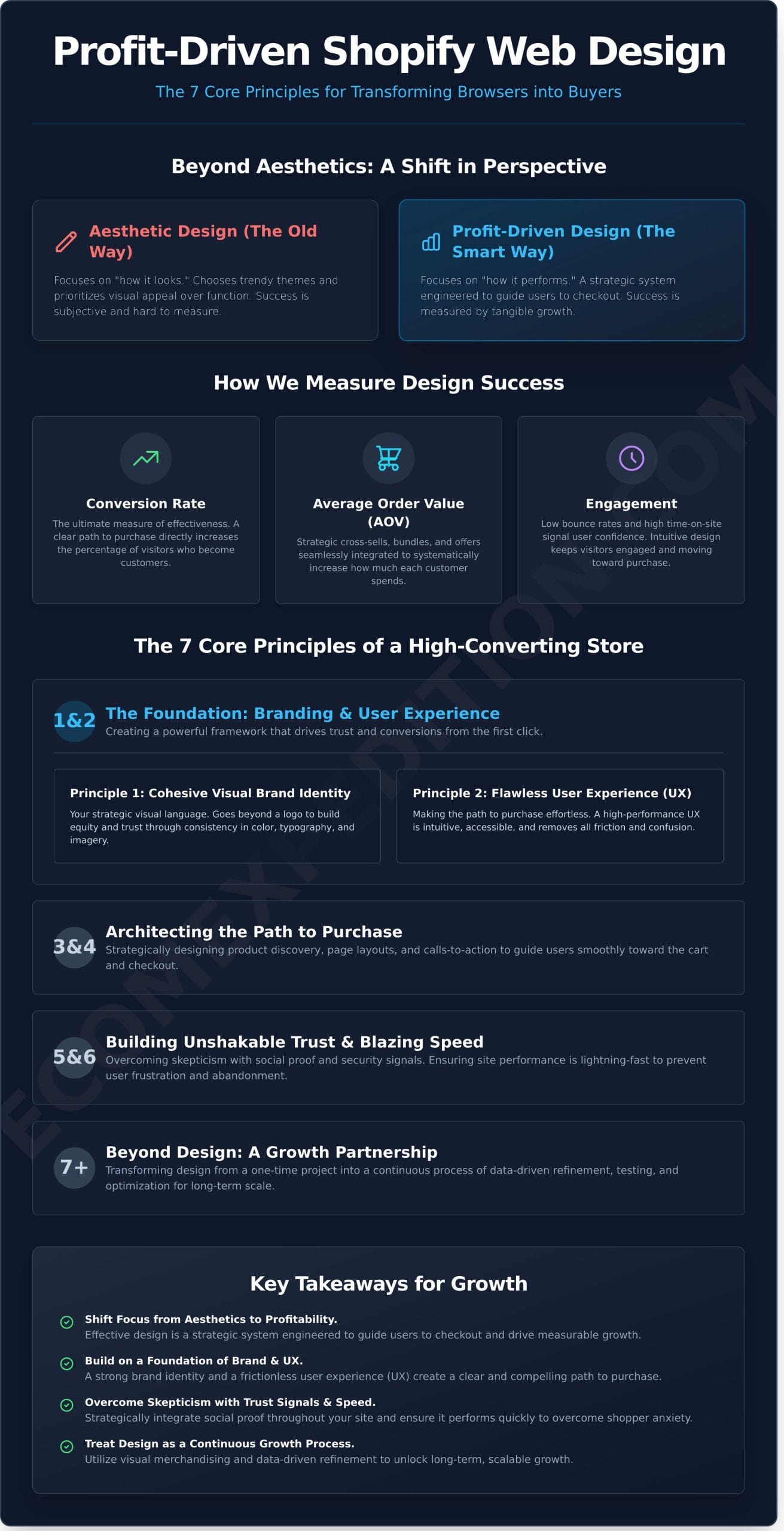
- Shift your perspective from aesthetics to profitability. Effective design is a strategic system engineered to guide users directly to checkout and drive measurable growth.
- A strong brand identity and a frictionless user experience (UX) are the non-negotiable foundations for a high-converting store, creating a clear and compelling path to purchase.
- Overcome shopper skepticism and purchase anxiety by strategically integrating trust signals like social proof throughout your site. Speed is a critical component of this trust.
- Transform your approach to shopify web design from a one-time project into a continuous growth process. Learn how visual merchandising and data-driven refinement unlock long-term scale.
Beyond Aesthetics: What is Profit-Driven Shopify Web design?
Many merchants mistake effective Shopify web design for simply choosing a visually appealing theme. This is a critical, and often costly, error. Profit-driven design is not about winning art awards; it is a strategic system engineered to convert visitors into customers. It is the science of aligning your store’s user experience (UX) and user interface (UI) with a single, overriding objective: to drive measurable growth.
Where aesthetic design focuses on “how it looks,” conversion-focused design asks “how it performs.” Every decision-from the color of a ‘Buy Now’ button to the layout of a product page-is deliberate and data-backed. This approach moves beyond subjective taste and grounds decisions in proven web design principles, user psychology, and your store’s unique analytics. The goal is to transform your digital storefront from a passive brochure into a high-performance sales engine, built to increase conversion rates, boost average order value (AOV), and maximize customer lifetime value (LTV).
The Role of Design in Building Brand Trust
Your website is often the first interaction a potential customer has with your brand. A professional, cohesive design instantly signals credibility and trustworthiness. In contrast, a poorly designed site-one that is slow, confusing, or visually inconsistent-creates friction and doubt, leading to high bounce rates and lost sales. Consistent design across your store builds brand recognition, fostering the loyalty that turns one-time buyers into repeat customers.
Key Metrics to Measure Design Success
A profit-driven approach to design is not based on guesswork; its success is measured by tangible performance indicators. We focus on the metrics that directly impact your bottom line:
- Conversion Rate: This is the ultimate measure of design effectiveness. A well-designed site removes barriers to purchase and clearly guides users to checkout, directly increasing the percentage of visitors who become customers.
- Average Order Value (AOV): Strategic design can systematically increase how much each customer spends. This includes implementing intelligent cross-sells, product bundles, and tiered-shipping offers that are seamlessly integrated into the user experience.
- Bounce Rate & Time on Site: These metrics gauge user engagement. An intuitive navigation, compelling product imagery, and clear value propositions keep visitors on your site longer, giving them the confidence and information they need to make a purchase.
Principle 1 & 2: Building a Solid Foundation with Branding and UX
Before a single product is sold, the most critical work is done at the foundation. Many brands mistake a visually appealing site for a high-performing one, but sustainable growth is built on two interconnected pillars: brand identity and user experience (UX). Your brand identity is the soul of your store-it communicates your value and builds an immediate emotional connection. UX is the science behind the customer journey, ensuring that connection is never broken by friction or confusion. When these two elements are strategically aligned, they create a powerful and persuasive framework that drives trust and conversions from the first click.
Principle 1: Establish a Cohesive Visual Brand Identity
Your brand identity is the strategic visual language that communicates who you are. This goes far beyond a logo. It requires a disciplined approach to defining your color palette, typography, and imagery style to create a consistent and memorable impression. We recommend developing a formal style guide to ensure every page, email, and ad reinforces the same professional image. This consistency is non-negotiable for building brand equity and customer trust.
Principle 2: Prioritize a Flawless User Experience (UX)
If branding is the promise, UX is the delivery. A flawless user experience is the defining factor in turning visitors into loyal customers. The goal of any successful shopify web design is to make the path to purchase completely effortless. This means removing cognitive load at every step, making information easy to find, and ensuring the entire site feels intuitive. A frustrated user will not convert; they will simply leave.
Executing a high-performance UX strategy involves a methodical focus on several key areas:
- Intuitive Navigation: Your menus and site structure must be logical and predictable. Customers should never have to guess where to find a product category or their shopping cart.
- Information Accessibility: Critical information like shipping policies, return processes, and contact details must be immediately accessible, typically from the footer or a dedicated help section.
- Readability and Clarity: Utilize clean layouts, legible fonts, and ample white space to make content easy to scan and digest. Overcrowded pages create decision paralysis and increase bounce rates.
- Powerful Search Function: Implement a robust and forgiving search bar that delivers relevant results, even with typos. A great search function is a direct path to conversion for high-intent shoppers.
Principle 3 & 4: Architecting the Path to Purchase
A visually stunning site that fails to convert is a liability, not an asset. Effective shopify web design is a strategic exercise in guiding user behavior toward a single, profitable outcome: the purchase. Every element, from a button’s color to the layout of a product page, must serve this primary objective. The goal is to create a frictionless journey that builds momentum, transforming a casual browser into a loyal customer with each deliberate click.
Principle 3: Implement Conversion-Centered Design
Conversion-Centered Design (CCD) is the discipline of building a user experience that systematically eliminates hesitation and drives action. It’s about making the desired path the easiest path. This isn’t about manipulation; it’s about clarity and persuasion, ensuring your value proposition is understood and acted upon. Key tactical implementations include:
- Compelling Calls-to-Action (CTAs): Use clear, action-oriented language (e.g., “Add to Cart,” “Buy Now”) on high-contrast buttons that are impossible to miss.
- Persuasive Product Pages: Design for scannability with high-quality imagery, concise benefit-driven copy, social proof like reviews, and clear shipping/return policies to build trust.
- Streamlined Checkout: Reduce the number of fields and steps required. A complex checkout is the number one driver of cart abandonment. Simplify the process to maximize revenue.
Of course, a streamlined checkout relies on more than just design; it requires the right payment processing technology. For businesses evaluating their options, it can be helpful to discover Merchant Solutions Corp and their POS systems.
Principle 4: Adopt a Mobile-First Design Philosophy
For most e-commerce brands, mobile is not just another channel; it is the primary channel. A mobile-first approach to shopify web design is therefore non-negotiable for growth and profitability. This means designing the mobile experience first and then adapting it for larger screens, not the other way around. This ensures the majority of your users have a flawless experience.
- Thumb-Friendly Navigation: Place key navigation elements and CTAs within the natural sweep of the thumb for easy one-handed use.
- Tappable Elements: Ensure buttons and links are large enough to be tapped accurately without accidental clicks, reducing user frustration.
- Optimized Mobile Payments: Integrate digital wallets like Shop Pay, Apple Pay, and Google Pay to enable one-tap checkout, drastically reducing friction at the final step.
- Rigorous Testing: Test your design across a range of popular iOS and Android devices to ensure a consistent, high-performance experience for every visitor.
Principle 5 & 6: Building Unshakable Trust and Blazing Speed
Even the most visually stunning Shopify store will fail to convert if it lacks two foundational pillars: trust and speed. Modern shoppers are skeptical and impatient. A design that ignores these realities is engineered for failure. A slow, untrustworthy site will hemorrhage potential customers, destroying your ROI regardless of how much you invest in traffic.
Ultimately, trust and speed are not aesthetic choices; they are foundational business assets that directly impact your bottom line. They are the invisible architecture that supports every sale.
Principle 5: Seamlessly Integrate Social Proof
Trust is not assumed; it must be earned on every page. Social proof is your most powerful tool for dismantling purchase anxiety and validating a customer’s decision. Your design must strategically present evidence that real people buy from, and are happy with, your brand. This isn’t about vanity; it’s about conversion architecture.
- Customer Reviews: Prominently display star ratings and written reviews directly on your product pages. Make them easy to find and read.
- Testimonials & UGC: Leverage longer-form testimonials and user-generated content (like customer photos) on your homepage and landing pages to build a powerful brand narrative.
- Trust Badges: Clearly display secure payment logos (Visa, PayPal, etc.) and icons for satisfaction guarantees or free shipping near the “Add to Cart” button to reduce last-minute friction.
Principle 6: Obsess Over Technical Performance and Page Speed
In e-commerce, speed equals revenue. Every millisecond of delay increases your bounce rate and costs you sales. Page speed is also a critical ranking factor for Google, making it a cornerstone of both user experience and SEO. A core discipline in high-performance shopify web design is a relentless focus on technical optimization.
- Image Optimization: Compress all images to reduce file size without a noticeable loss in quality. Use modern formats like WebP where possible.
- Lean App & Script Usage: Every app or custom script adds weight to your site. Regularly audit your apps and remove any that are not delivering significant ROI.
- Performance-Optimized Theme: Your theme is the foundation. Starting with a well-coded, lightweight theme is a critical first step in any professional shopify web design project.
- Constant Monitoring: Use tools like Google PageSpeed Insights to regularly diagnose performance bottlenecks and address them proactively.
Principle 7 & Beyond: From Great Design to a Growth Partnership
The previous principles provide the strategic framework for a high-performing Shopify store. But the final element separates stagnant sites from scalable e-commerce brands: treating your website not as a static project, but as a dynamic growth asset. Great design is the starting line, not the finish.
Principle 7: Master Visual Merchandising and Storytelling
Your Shopify store is not a digital catalog; it is your flagship retail experience. Customers buy into stories and solutions long before they add a product to their cart. Mastering visual merchandising means transforming product grids into a compelling narrative that connects, builds trust, and drives purchase decisions.
To see these principles in action and get inspiration from a live e-commerce environment, you can discover SUZANA SHOP.
- Showcase Value with High-Impact Media: Professional product photography and video are investments in trust and clarity. They articulate quality, demonstrate use cases, and answer customer questions before they are even asked, directly impacting conversion rates.
- Curate Narrative-Driven Collections: Move beyond simple product categories. Build collections that tell a story or solve a problem, such as “The Weekend Getaway Kit” or “Your Complete Morning Ritual.” Guide your customer through a curated journey, not just a list of items.
- Humanize Your Brand: Your About Us page is a critical conversion asset. Use it to share your mission, introduce your team, and forge a genuine connection that transcends the transaction and builds long-term loyalty.
When to Transition from DIY to a Professional Design Partner
Recognizing the limits of a DIY approach or a pre-built theme is not a failure; it is a clear sign of success. It indicates your business has outgrown its initial setup and is ready for a strategic investment to unlock the next phase of profitability. The key is to identify the signals before growth stalls completely.
It’s time to seek a growth partner when:
- Your conversion rate has plateaued. You have proven product-market fit and consistent traffic, but sales have hit a ceiling. A strategic partner can diagnose UX friction points and optimize the path to purchase.
- You spend more time fixing than growing. If your days are consumed by app conflicts, theme updates, and technical glitches instead of marketing and strategy, your time is not being invested for maximum ROI.
- Your brand vision exceeds your theme’s capability. You need custom functionality or a bespoke brand experience that an off-the-shelf template simply cannot provide for your shopify web design.
A world-class e-commerce presence is an ongoing process of optimization. When you are ready to move from managing a website to driving a growth engine, the right partnership is essential. Book a free strategy call to see if a partnership is right for you.
Transform Your Shopify Store into a Growth Engine
As we’ve explored, exceptional shopify web design is not about flashy visuals-it’s a strategic framework built to drive revenue. It begins with a solid foundation of branding and user experience and is amplified by building unshakable trust and ensuring blazing-fast performance. These principles work in concert to transform your online store from a simple digital catalog into a powerful, high-converting sales machine.
But applying these principles requires more than just knowledge; it requires seasoned expertise. At Ecom Expedition, we bring 27+ years of e-commerce experience to every project. We don’t act as a vendor; we integrate as your dedicated growth partner, implementing a strategic approach focused on delivering 2-4x ROI. If you are ready to build a store engineered for profitability, it’s time to connect.
Partner with us to build a profit-driven Shopify store.
Your journey to scalable, sustainable growth starts now.
Frequently Asked Questions
What is the difference between a Shopify theme and a custom web design?
A Shopify theme is a pre-built template offering a fast and cost-effective way to launch. However, it can limit brand expression and unique user experiences. Custom web design is a bespoke solution, built from the ground up to match your specific brand identity, strategic goals, and customer journey. It provides complete control over UX, functionality, and scalability, delivering a powerful competitive advantage for brands serious about growth.
How much does professional Shopify web design typically cost?
The investment for professional Shopify web design varies based on strategic objectives. A theme customization project can range from $5,000 to $15,000. A fully custom, data-driven design with unique features and integrations typically starts at $25,000 and can exceed $100,000 for complex stores. The final cost is always determined by the scope required to achieve your specific growth and profitability targets, ensuring a clear return on investment.
Can I redesign my Shopify store without losing my products and customer data?
Absolutely. Your products, customer information, and order history are stored securely within your Shopify account, independent of the storefront design or theme. A professional redesign process focuses on building a new, high-performance front-end experience while ensuring all your critical backend data remains completely intact and untouched. There is no risk of data loss when the migration and development are handled by an experienced partner.
How long does a typical Shopify web design project take from start to finish?
Timelines directly reflect a project’s complexity and strategic depth. A theme customization project typically takes 6 to 10 weeks. A comprehensive custom Shopify web design, involving in-depth strategy, bespoke design, and development, usually requires 12 to 20 weeks from kickoff to launch. An efficient timeline is driven by a methodical process and a collaborative partnership that ensures clear communication and decisive feedback at every stage.
What are the best Shopify 2.0 themes for high conversions?
The “best” theme is one that aligns with your specific brand and business goals. However, themes like Impulse, Prestige, and Turbo are consistently recognized for high performance. They deliver fast load times, a superior mobile-first UX, and built-in conversion features like advanced filtering and quick-buy options. The optimal choice always depends on a strategic analysis of your product catalog, target audience, and desired customer journey.
How does Shopify web design impact my store’s SEO performance?
Strategic Shopify web design is foundational to strong SEO. A professionally built site ensures fast page speeds, a mobile-first responsive layout, and clean, crawlable code-all critical ranking factors for Google. It also establishes a logical site architecture and URL structure, which helps search engines understand your content and improves user navigation. This technical excellence directly translates into higher visibility, increased organic traffic, and better search engine rankings.